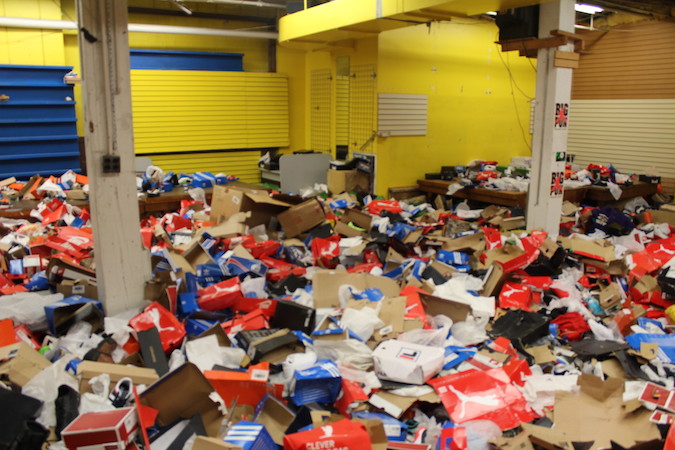
I present to you, the backdrop. Humor with me this scenario…
You believe in the right to protest. You believe in the principle of “government for the people, by the people”. You believe it is the right of the people to stand up and voice their displeasure when their government does not serve them, or worse, wages war against them. In this scenario, you are a black person in America, and there are certainly black people who feel under siege by the police in their communities. This is your reality. You feel, in America, people with darker pigments of skin only benefit from the white majority being morally and financially divided on the issue of how to treat people who have similar skin tone as you. Surely, there are some who still believe you are less than human. Surely, there are some who will believe in your humanity but view your life as something less valuable than a white person’s life. Somewhere out there, there may even be some who believe you are created equal to a white person. Since the abolishment of Slavery in the USA, White America has wrestled with it’s divided opinions surrounding how to treat those classified as “black” in our society. People with brown skin have secured rights within society over the years, but brown people keep finding inconsistencies in society’s enforcement of the laws surrounding the violation of their rights.
The reality that White America is the real America and Black America is some cheap derivative is made painfully clear when you witness someone black being killed by the police on a video you watch from your social media timeline. The image of that person’s last moments on this earth is imprinted into your mind, and you follow the story in the news and on social media to learn more. You find out that no arrests have taken place, and your mind cannot fathom why. For you and people who look like you, the presence of physical evidence like the video you watched does not yield the same arrests that the video would yield if it were you in the video doing the killing. You are outraged.
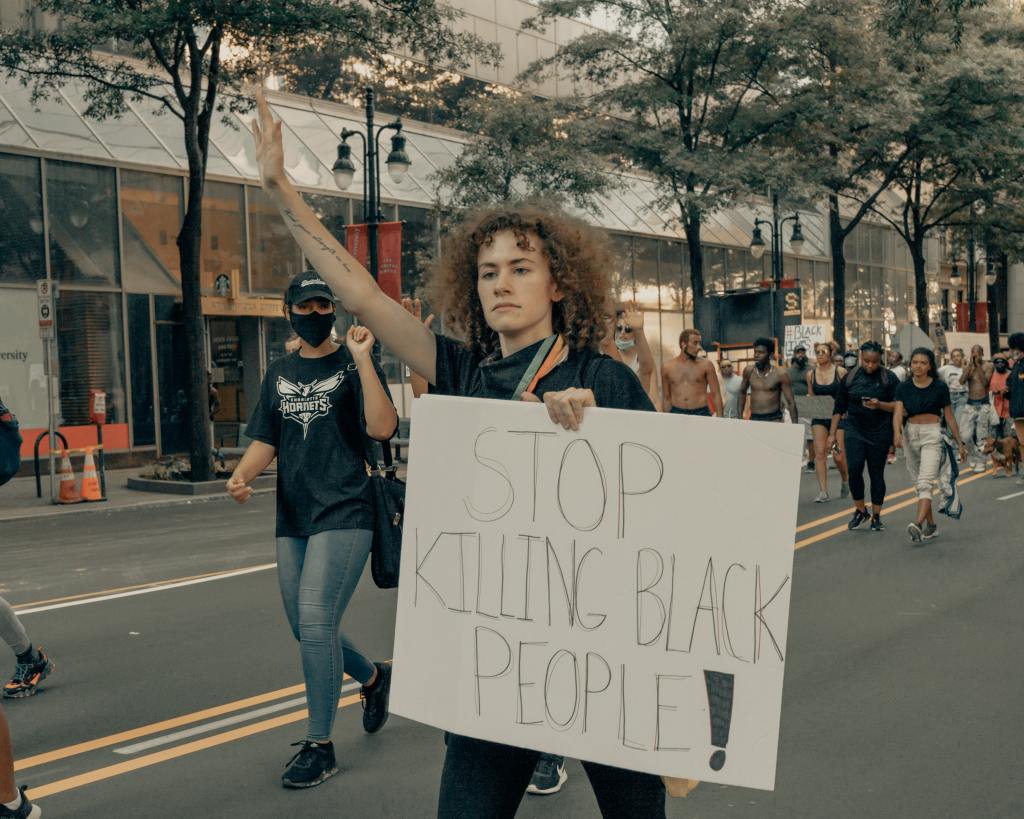
You decide to protest, and you assemble with a group of other people who share your outrage on the injustice, some you know but most you do not. You hold your sign, yell your message to all that will hear. You reflect on the history of your people as you walk and chant, because the act of protesting in this way is reminiscent of the days of the Civil Rights Movement. Yet, your reality through the prism of the Civil Rights Movement only intensifies your outrage, making you increasingly determined to get more definitive change within the system that oppresses you and people like you. You want to finish what your people started years ago. What will you do differently to bring about the change they could not? You wrestle in your mind for an answer to this age-old question, understanding that both the nonviolent and violent actions of your people, together, led to the incremental changes of the Civil Rights era. Suddenly, you hear glass shatter nearby. Someone in the crowd has caused damage to a business, and people are beginning to enter the building and take things…
What happens next will differ for you based on the combination of a multitude of factors. Your personal core values and morality, your needs, your socioeconomic status and ability to provide your own needs, your familiarity with the business that was damaged, and your level of outrage are only a few of the factors that will dictate what you do next. In fact, if not merely provocateurs, the same contributing factors would be the likely motivation for the unknown person who damaged the building in the first place.
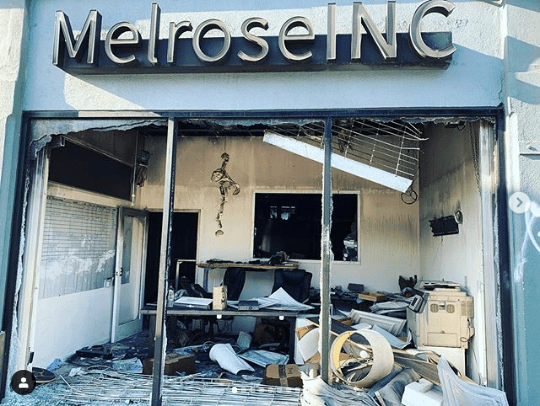
Consider the mindset of the immoral looter. For whatever reason, life experience has not given them the core values and morality to resist the temptation to steal. This person may shoplift on a normal day, merely because they have devised a scheme to get away with it. During a riot or protest, when the police are preoccupied, they could act with no respect or care for the just cause of the people assembled to protest injustice. This kind of person would even seek out such an environment to carry out their scheme, because it presents opportunity to escape consequence.
Consider the mindset of the need-based looter. This person develops a higher sense of morality when they themselves do not have a need. On a day when they just purchased the newest iPhone, they will be zealous about turning in a smartphone they found unattended at the Starbucks condiment counter to lost-and-found. However, when their current phone is “on the fritz”, stumbling upon a shiny new smart phone may be too good to pass up, even though they don’t feel completely right about taking it. This person could simply hear word that Target was broken into and show up to grab a TV because they wanted a new one.
Consider the mindset of the poor looter. This person lives their life on the edge of going without basic needs on a regular basis. This person may or may not be homeless, but they are living in poverty, nonetheless. If they have the opportunity to take something, they don’t have to know what it is or how valuable it is. They’re basic needs are on the forefront of their minds, so much so, that they would take anything and figure out it’s value later. This person could benefit greatly from riot in their community and would certainly seek out the opportunity to secure anything valuable for themselves in such an environment.
Consider the mindset of the vindictive looter. This person can justify doing wrong to those who they’ve associated as the source of their anguish. We all know someone who is vindictive. When given the opportunity to kick their enemy when they are down, they will most certainly take it. If there was a negative interaction with a representative of a business, it may be all this person needs to destroy and loot from the business.
Lastly, consider the mindset of the enraged looter. This person is in a genuine state of rage over the issues that plagues them. There is not much forethought to any of their actions and they are capable of almost anything in this dangerous mental state. They’re looting is out of their anger and it doesn’t have to be anything personal. They are reflecting their pain on the world around them in any way they can.
In America, especially during this time of pandemic, you cannot isolate any of these mindsets to only black people. You, most certainly, should not link the actions of any looter to the cause of the nearby protest. You could consider looting a byproduct of the cause for some, while most others are merely capitalizing off an opportunity for free goods while the law of the land is too preoccupied to enforce immediate consequences. Minus the unknown provocateurs, I believe the video footage of the George Floyd riots reflects the diversity of the people with these mindsets. However, if you tried to isolate these behaviors to only black people or tried to provide some statistical analysis of why the mentalities I discussed are more common among African Americans, you would only be highlighting factors created by systemic racism and highlighting the things that we should be trying to change rather than perpetuate.
Too often, the laws of our society fail to serve the black man and woman. If this yields lawless acts of the black man and woman, we should not pretend to not understand their reactions, whether we agree or disagree with the lawlessness. Looting has always been part of riots because of the lawless climate it creates. If someone would steal on a regular day, they would certainly loot during a riot. When the thing you want for yourself is right before you, nobody is going to stop you from taking it, and if you don’t take it someone else will because you’re surrounded by takers, only a higher sense of personal accountability and morality will stop you from doing so. You cannot fathom what you will do until put into position and presented the temptation of no immediate consequence. This is the mindset of the looter, yet this is ironically the mindset of the police officer abusing his or her power of authority and use of force. If we care about the lawlessness of the rioting looter, we have to care just as much about the lawlessness of the police officer. It is the African American’s desire for police officers to have a similar higher sense of morality and personal accountability in their use of force, yet we are still trying to fix the system that should hold them accountable when they they fail to protect and serve the black civilian. The black civilian only has the ability to loot in times of riot, while the police officer can exert their power over the black person at any time. Certainly, there are abuses the black person endures at the hand of police that are less severe than death. Yet, it is only in the extreme cases of wrongful death do you get the mass media response, subsequent protests, and occasional riots. It is my hope that law and order is reestablished across the board, that there may be justice for all lawlessness and less hypocrisy in the world.
 Fresh Ideas - The Blog
One response to “A Looter’s Mindset”
I want to stress that a looter could possess one or more of the mindsets I’ve listed as well as other motivations I have not mentioned. When you understand the mentality, you can diagnose the behavior and respond from a place of education and empathy. A sympathizer is someone who agrees or supports a sentiment or opinion. You will never sympathize with anyone you do not first attempt to understand. Sometimes, you have to put the act you don’t agree with aside to understand the reasons behind the act. On the path to the solution you seek, you may even find something you agree with in the process. Once you have that understanding, you can address the root of the behavior to prevent the undesirable act from happening in the future. It sounds so simple, but when it requires people to compromise their own interests while they have all the leverage there is very little incentive for change. The riots give the powers that be an incentive to listen and maybe even act on the behalf of the interests of others.
LikeLike